





Recent research combining remote sensing with field observations in Yellowstone National Park suggested that bison can "engineer the green wave." That is, their grazing may change the timing and speed of the spring greening across prairies. Specifically, bison grazing seems to prompt grasslands to green up faster, more intensely, and for longer duration. Cattle graze differently from bison, and therefore they may have different effects on the dynamics of the green wave, as well as soil attributes and biodiversity. On evolutionary grounds, it is reasonable to hypothesize that North American native plant communities exhibit greater carbon sequestration and resilience under grazing by bison — with which they coevolved — than under grazing by cattle, which are non-native. However, important questions about the ecological benefits of bison versus cattle in various grassland ecosystems remain unresolved.
The Wind River Tribal Buffalo Initiative has recently reintroduced bison in and around the Wind River Reservation in Wyoming, and further expansions of the program are planned for the near future. This program is one of many in which previously unoccupied or cattle-grazed grasslands have recently been repopulated with a population of bison of known size. This recent history of reintroduction offers a potentially revealing time-series. The CE Bison Lab set out to investigate how bison rewilding impacts grassland ecology in these projects, using remote sensing to track changes over time.
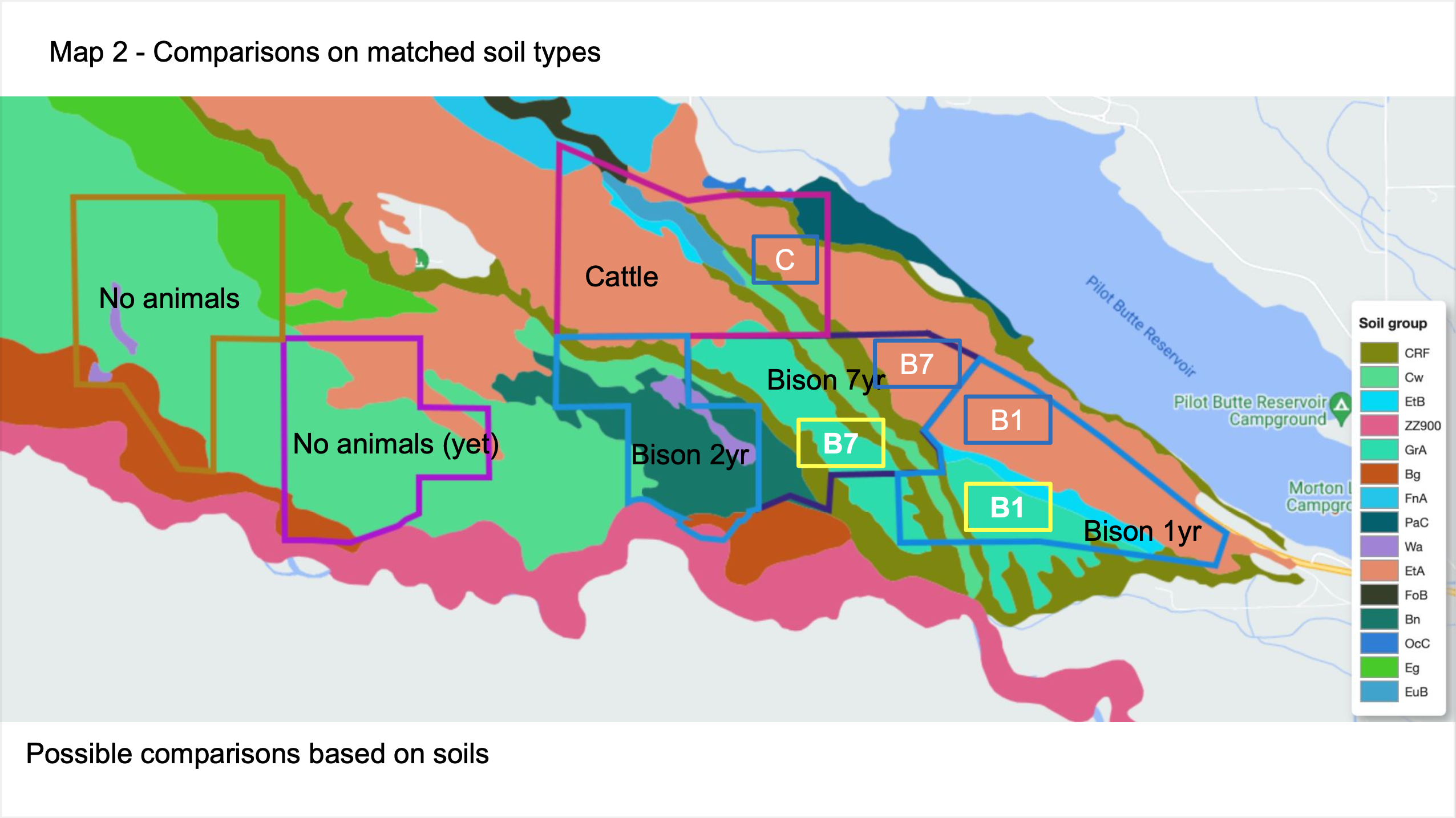
The team’s plan was to focus initially on the Wind River Tribal Buffalo Initiative, where buffalo had been introduced to certain fields seven years ago, and to others two years ago. The team designed a comparison between fields, controlling for soil type, and investigated whether remotely sensed data could reveal any effects the bison had on grassland attributes. Interestingly, an important obstacle for this analysis was that the separate fields likely experienced different treatments in periods preceding the analysis, resulting in pre-existing differences. In short, there was no perfect control case for the treatment of bison introduction.
Ultimately, the team determined that on-the-ground measurements of plant community properties as well as soil biogeochemistry would be needed to provide a rigorous answer to the questions pursued in this lab. In addition, an expanded database of additional bison rewilding projects might provide a large enough sample to reveal signals amid the noise of variation across sites. Progress in this lab was incorporated into the plan for CE’s Bison Project, which is now underway on the grasslands of both WRTBI and the Cheyenne and Arapaho tribes in Oklahoma.
The last few decades of bison rewilding in North America has made it clear that the return of bison herds can play a pivotal role in regeneration not only of prairies but also of peoples. Further investigation of the relationship between bison and rates of carbon sequestration, resilience of prairie to climate change, and recovery of biodiversity will be needed to catalyze widespread reintroduction of bison to an increasing portion of their former range.
-
Buffalo Restoration, Wind River Tribal Buffalo Initiative, National Wildlife Federation’s Tribal Partnerships Program
Lab Leader
Buffalo Restoration, Wind River Tribal Buffalo Initiative, National Wildlife Federation’s Tribal Partnerships Program
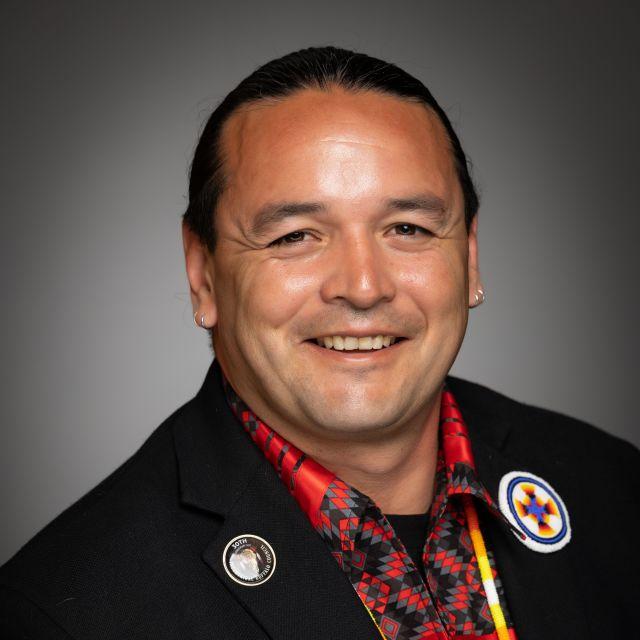
Jason Baldes sits on the board of directors for the Inter-Tribal Buffalo Council, board of trustees for the Conservation Lands Foundation, and the environmental commission of the Congress of Nations & States. He is the executive director of the Wind River Tribal Buffalo Initiative, and adjunct professor at Central Wyoming College and Wind River Tribal College. Jason is a member of the Eastern Shoshone Tribe and manages the Tribes’ herd of 65 buffalo.
Landscape Ecology and Remote Sensing, Regen Network
Lab Leader
Landscape Ecology and Remote Sensing, Regen Network
Gisel Booman is an experienced researcher who has been leading the Science Team at RND Inc. since 2018. In 2013, Gisel became an adjunct university professor, teaching GIS to agronomists at the UNMdP. Between 2015 and 2017, she was awarded a fellowship by CONICET, to contribute to the UE project iMetLand. She has authored scientific publications and is the author of the CarbonPlus Grasslands Methodology, published on Regen Registry, with credits sold to the Microsoft Moonshot.

Soil Biogeochemistry and Sustainability Policy, Brown University
Lab Leader
Soil Biogeochemistry and Sustainability Policy, Brown University
Dr. Stephen Porder is a Professor of Ecology, Biology and Environment and Society and Associate Provost for Sustainability at Brown University. His research focuses on nutrient and carbon cycling in tropical rainforests, the implications of industrial agriculture in the tropics, and the potential for large scale tropical forest restoration. He is the founder of the Possibly podcast, author of “Elemental,” and holds a PhD in Ecology and Evolutionary Biology from Stanford University.

Remote Sensing and Data Science, Arable
Lab Member
Remote Sensing and Data Science, Arable
Dr. Colin Hill is an applied scientist and remote sensing expert with experience in both start-ups and academia. He has worked as a data scientist for numerous organizations including Regrow Ag and WeatherForce, and he focuses on building science data products for environmental, weather, and climate applications. He holds a PhD in Astrophysics from Queen's University Belfast.

Biogeochemistry and Data Science, New Hampshire Department of Health and Human Services
Lab Member
Biogeochemistry and Data Science, New Hampshire Department of Health and Human Services
Dr. Emily Austin is a Soil Ecologist and Data Scientist, with a research focus on soil carbon and climate change. She currently works as the Data Team Lead at the NH Department of Health and Human Services, and holds a PhD in Ecology and Evolutionary Biology from the University of Tennessee.

Entrepreneur and Graphics Software Development, Storm Peak Innovations
Lab Member
Entrepreneur and Graphics Software Development, Storm Peak Innovations
Jens Owen is a serial entrepreneur and experienced startup mentor, with expertise in open-source software and technologies associated with modern 3D graphics drivers. He has helped found multiple companies, including Bedrock Labs, which builds tech solutions for problems at the intersection of climate and community.
Software and Geospatial Engineering, TerraFrame Inc.
Lab Member
Software and Geospatial Engineering, TerraFrame Inc.
Justin Lewis is a software developer and product lead with strong interests in climate and impact work. He is the VP of Product and a Senior GIS Developer at TerraFrame Inc., as is a co-founder of Bedrock Labs. He helps lead development of open-source tools to support the transition to Geospatial Knowledge Infrastructures (GKI) and Spatial Data Infrastructures for governments around the world, with a particular focus on health, national data programs, and climate.